

Press Releases
House Passes Moran-Sewell Bipartisan Bill to Bring Long-Needed Reforms to the Tax Court
Washington, D.C.,
December 1, 2025
U.S. Representatives Nathaniel Moran (TX-01) and Terri Sewell (AL-07) announced today that the Tax Court Improvement Act passed the U.S. House of Representatives unanimously. The legislation previously advanced out of the Ways and Means Committee in September with unanimous support, passing by a vote of 40-0. “For too long, the Tax Court has been outdated and inefficient, and American taxpayers have paid the price,” said Congressman Moran. “This legislation delivers long-overdue updates that modernize the system, ensuring greater fairness and integrity, and delivering real results for the American people.” Key reforms in the bill include:
These reforms advance three simple goals: fairness, clarity, and accountability in the tax process. “The Tax Court Improvement Act is part of an ongoing effort by the Ways and Means Committee to protect taxpayers,” said Ways and Means Committee Chairman Jason Smith (MO-08). “Americans deserve strong legal protections when appearing before the only court in the country where they can dispute a tax estimate from the IRS without first paying that tax. I want to thank Congressman Moran for championing this effort and for his resolute support for the rights of American taxpayers.” “Our constituents deserve a Tax Court that is efficient, fair, and transparent,” said Congresswoman Sewell. “I was proud to work with my colleague Congressman Moran to lead the bipartisan Tax Court Improvement Act which will have a tangible impact on the thousands of taxpayers and small businesses that utilize the court every year.”
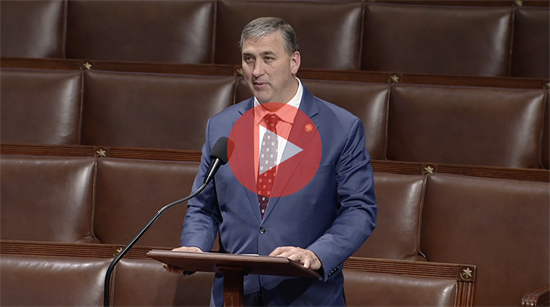
Watch Congressman Moran’s Full Remarks HERE
Thank you, Mr. Speaker. I rise today in strong support of the Tax Court Improvement Act. This taxpayer-friendly bill significantly improves the critical tax court process available to Americans who find themselves in a dispute with the IRS. I want to thank specifically Representative Terri Sewell, who joined me in co-authoring this bill, and for recognizing that taxpayers deserve a court process that is clear, timely, efficient, and just. Her work on this bill reflects our joint commitment to the people that we serve. For too long, the tax court has operated under preexisting rules that do not mirror many of the well-established procedures for other courts, and rules that are antiquated in their application. In short, changes needed to be made so that the tax court process works better for the people that it serves. But this bill provides practical updates that help the court do its job more effectively and helps taxpayers find resolution more easily and quickly. First, this bill modernizes the court's subpoena rules. Today, if someone is subpoenaed to produce documents before the tax court, they must show up in person. This wastes time, adds expense, and clogs an already full docket. Other Article I and Article III courts already allow documents to be submitted at times without requiring a physical appearance. This bill likewise gives the tax court the same common-sense flexibility, allowing judges to decide when someone truly needs to appear in person. Second, the bill helps the court address its growing case backlog. It does this by allowing special trial judges, who are experienced legal professionals who already handle much of the court's work, to take on additional responsibilities with the consent of the taxpayer. If the taxpayer agrees, these special trial judges can hear certain additional matters, issue final decisions in specific cases, and use limited contempt authority to maintain order. This is similar to how magistrate judges currently assist federal court district judges to streamline their dockets when consent of the parties exists. The result is simple: faster resolutions for taxpayers without sacrificing expertise on the bench, fairness in the process, or integrity in the result. Third, the bill strengthens public trust by creating clear ethical standards for tax court judges. Article III judges already have statutory recusal rules. Currently, tax court judges do not. Codifying disqualification requirements ensures that taxpayers know that their case will be heard by a judge who is impartial and above reproach. This change helps to take away any indicia of impropriety in the process, again, giving weight to the soundness of the final judgment. Finally, this legislation clarifies the court's authority to use equitable tolling in deficiency cases. Today, if a taxpayer misses a filing deadline, even due to illness, natural disaster, or even being given incorrect information, the court often has no ability to offer relief to that taxpayer. Cases can be dismissed before the merits are even heard, putting taxpayers at risk for losing their claim when they are not at fault for missing the deadline, and that is not a just result. This bill ensures the court can make determinations based on the substance of claims, not just procedural technicalities, especially when a taxpayer is acting in good faith. Taken together, these reforms make the tax court more efficient, more responsive, and more just for the American taxpayer. They reflect these values that guide our work in the chamber: strong institutions, fair treatment for taxpayers, and renewed trust in our government processes. This is a measured, practical bill that passed unanimously in committee, and it deserves the support of this House on both sides of the aisle. I urge my colleagues to vote for the Tax Court Improvement Act to help strengthen a court process that plays a vital role in protecting our taxpayers' rights and ensuring accountability of the IRS within our tax system. Thank you, and I yield back. ###
|