Dear East Texas,
I want to thank East Texans for their support, allowing me the honor of continuing to represent the First Congressional District of Texas in Washington, D.C. I do not take this responsibility lightly. THANK YOU for granting me the privilege of serving your families alongside my own. While only a few days are left in this 119th Congress, there is still much more work to be done in the many days ahead. Here are just a few items to be watching for as we head into the lame duck session: - Appropriations and Health Care Extenders. The current continuing resolution (CR) expires December 11, 2026. I am hopeful that we can pass the full FY2027 funding package, but that would require bipartisan support in the Senate. If that is not possible, then an additional CR might be the result. Congress must also address numerous expiring health provisions, including Community Health Center Funding, the Special Diabetes Program, Medicare-Dependent Hospital payments, and other essential programs.
- National Defense Authorization Act (NDAA). The House passed its NDAA in July, but the Senate did not invoke cloture on its version amid disagreements. The chambers are currently holding informal conference negotiations, but the NDAA is a priority bill to pass before the end of the year. Passage gives surety to our military about the priorities of the legislative branch when it comes to defense spending, and authorization of any new defense programs.
- Debt Ceiling. Recall that the debt limit was increased by $5 trillion to $41.1 trillion in July 2025. Given the current trajectory, it is likely that the debt ceiling will reach that limit sometime in 2027. President Trump has urged Congress to address the debt ceiling during the lame duck.
- Bipartisan Americans Affordability and Jobs Act (BAAJA) — Permitting Reform. The BAAJA would revise the National Environmental Policy Act, Clean Water Act, and other existing laws in order to eliminate red tape bureaucracy including procedures concerning the scope of agencies' review, as well as timelines, and I believe that it is highly likely that the bill will be taken up during the lame duck session. This would help streamline approval for energy projects of all types.
- Water Resources Development Act (WRDA). The House has already passed WRDA 2026 by a vote of 415–9, and the Senate committee unanimously reported its bill. Differences remain, but this bill has bipartisan and bicameral support, so it is very likely that this legislation makes it out of Congress and to the President’s desk before the end of the year.
- Farm Bill. The Farm Bill was previously extended through September 30, 2026, while USDA funding runs through December 11, 2026. The Senate has advanced its version out of committee, but it has not reached the floor. So, the Senate still has work to do before the Senate and the House can work out any remaining differences between those two bodies. Key disagreements concern delaying implementation of substantive SNAP changes made in the WFTC, and the timing of implementation of those changes.
- Other Bills. Other bills that you might see if they get enough support and traction include:
- Kids Internet and Digital Safety (KIDS) Act
- BUILD America 250 Act (Surface Transportation reauthorization)
- A Bipartisan Tax Package (potentially to include the Taxpayer Assistance & Service Act)
- Reconciliation Package
|
East Texas Chamber Delegation |
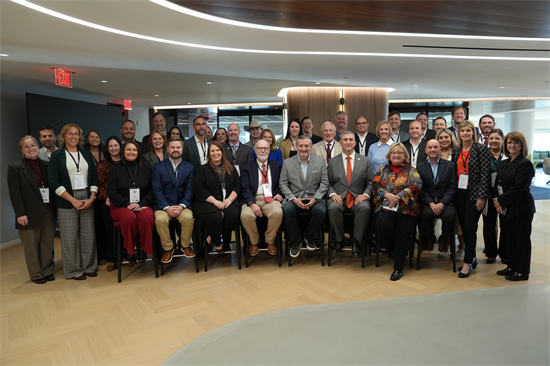
This week, I welcomed the East Texas Chamber Delegation to Washington for their bi-annual trip to DC. This collective group brings together Chambers of Commerce from communities across East Texas, united by a shared goal: advancing pro-business policies and smart investments that create jobs, support local employers, and keep East Texas growing.
Our conversation covered the issues that matter most to families and businesses back home. We discussed workforce development, infrastructure, and what it takes to build thriving communities across our region. And, we capped off a late night of work with the traditional scooter night tour of the monuments under the leadership of Mark Robinson. Together, we’re building stronger relationships and a stronger future for our region. |
Taking Action for America’s Veterans |
This week the House voted on two very important pieces of legislation, the Take Care of America’s Veterans Act and the Major Richard Star Act.
First, the Take Care of America’s Veterans Act is the most comprehensive legislation that puts veterans, families, caregivers, and survivors back at the center of the VA’s mission by expanding earned benefits and strengthening healthcare access, while remaining fiscally responsible.
This legislation also includes the Major Richard Star Act, which I am proud to co-sponsor. Major Richard Star served 32 years in the Army Reserve, deployed nine times to combat zones, and was medically retired due to deployment-linked cancer. Yet our government denied him the full retirement and VA disability benefits he earned.
Current law prevents most veterans from receiving both full military retired pay and VA disability benefits. Veterans must forfeit a portion of their earned retirement pay to receive VA disability compensation. The bipartisan legislation allows medically retired, combat-injured veterans to receive both their Department of War (DoW) retirement pay and their Department of Veterans Affairs (VA) disability compensation without the traditional dollar-for-dollar offset known as the “wounded veteran tax.”
The Congressional Budget Office has confirmed the Take Care of America’s Veterans Act actually reduces federal spending by $1.3 billion over the next decade. Those savings are then used to offset a broad package of long-standing veterans’ priorities, including the Major Richard Star Act, expanded survivor benefits, and improvements in rural and community care access.
This is what responsible governing looks like: we take care of those who sacrificed for us, and we do it without increasing deficits or adding to the national debt. Our veterans earned these benefits. They shouldn’t have to fight the Washington bureaucracy to claim them.
It is important to note that the Major Richard Star Act came to the floor as a standalone bill via a discharge petition. While a proud cosponsor of the Major Richard Star Act, I voted against the motion to proceed via a discharge petition because this bypasses the House Armed Services and Veterans’ Affairs Committees, leaving them unable to deliberate this important legislation. In the end, I voted in favor of both pieces of legislation to ensure that we deliver for our veterans. |
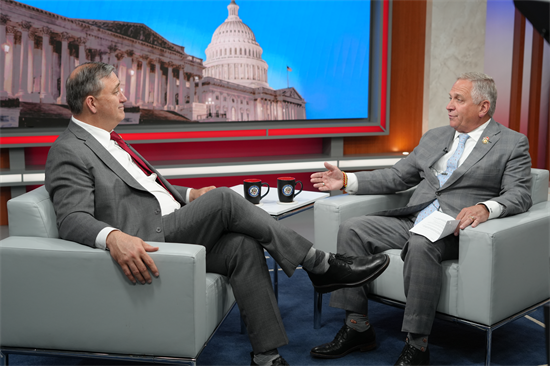
I sat down with the Chairman of the Veterans’ Committee, Mike Bost. Watch the conversation here. |
Retirement Fairness for Charities and Educational Institutions |
House Republicans are expanding retirement investment opportunities for workers who serve their communities in schools, charities, and churches. Community servants should have access to the same kinds of institutional retirement investments that are already available through many 401(k) plans.
This legislation removes securities-law barriers that prevent eligible 403(b) plans from investing in collective trusts and insurance companies’ separate accounts that are already available for many other retirement plans. Retirement law has not kept pace with how 403(b) plans operate today. House Republicans are removing an outdated securities-law barrier while keeping employers and fiduciaries responsible for the investments they offer.
Read the full legislation here. |
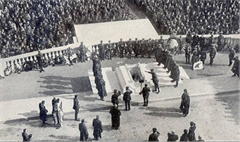
On November 11, 1921, the remains of an unidentified American service member were interred in a Tomb of the Unknown Soldier at Arlington National Cemetery in a ceremony presided over by President Warren G. Harding. |
Dealing with federal agencies can be complicated, and my office is here to help. If you need help with Social Security, the IRS, passport renewals, the VA, or other federal agencies, please do not hesitate to reach out to my office by calling (903) 561-6349 or visiting my website.
It is an honor to be your voice in Congress.
With gratitude, |
Nathaniel Moran Member of Congress |
Answer to Last Week's Texas Trivia Question
⬇️ Which unique aspect of the Texas Legislature is a direct legacy of the 1876 Texas Constitution's push for limited government? |
|
This Week's Texas Trivia Question How many times has the Texas constitution been amended? Check back next week for the answer! |
|
|